
Edward Johnston – handwritten Missal for Holy Trinity Church, Hastings
/In this guest blog Graham Seaton describes his discovery of a handwritten Missal by the father of modern calligraphy Edward Johnston in the safe of Holy Trinity Hastings and how the work and his subsequent research at the Crafts Study Centre played a key part in the Church’s successful bid to the National Lottery Heritage Fund.
Coincidences are a strange thing. It was by chance, in a quiet moment, that the vicar of Holy Trinity Hastings (or HTH) opened the church safe to show me a handwritten Missal or altar book. By chance I attended a lecture at the British Library and showed my photographs of the Missal to a leading modern calligrapher who told me we (HTH) had a rare and important work by Edward Johnston, the father of modern calligraphy and famously the designer of the London Underground typeface. By chance someone overheard me in Ditchling Museum of Art + Craft trying to find out more about Johnston (as he lived in the Sussex village for most of his life) and was able to point me to the Curator of Collections at the Crafts Study Centre – Greta Bertram.
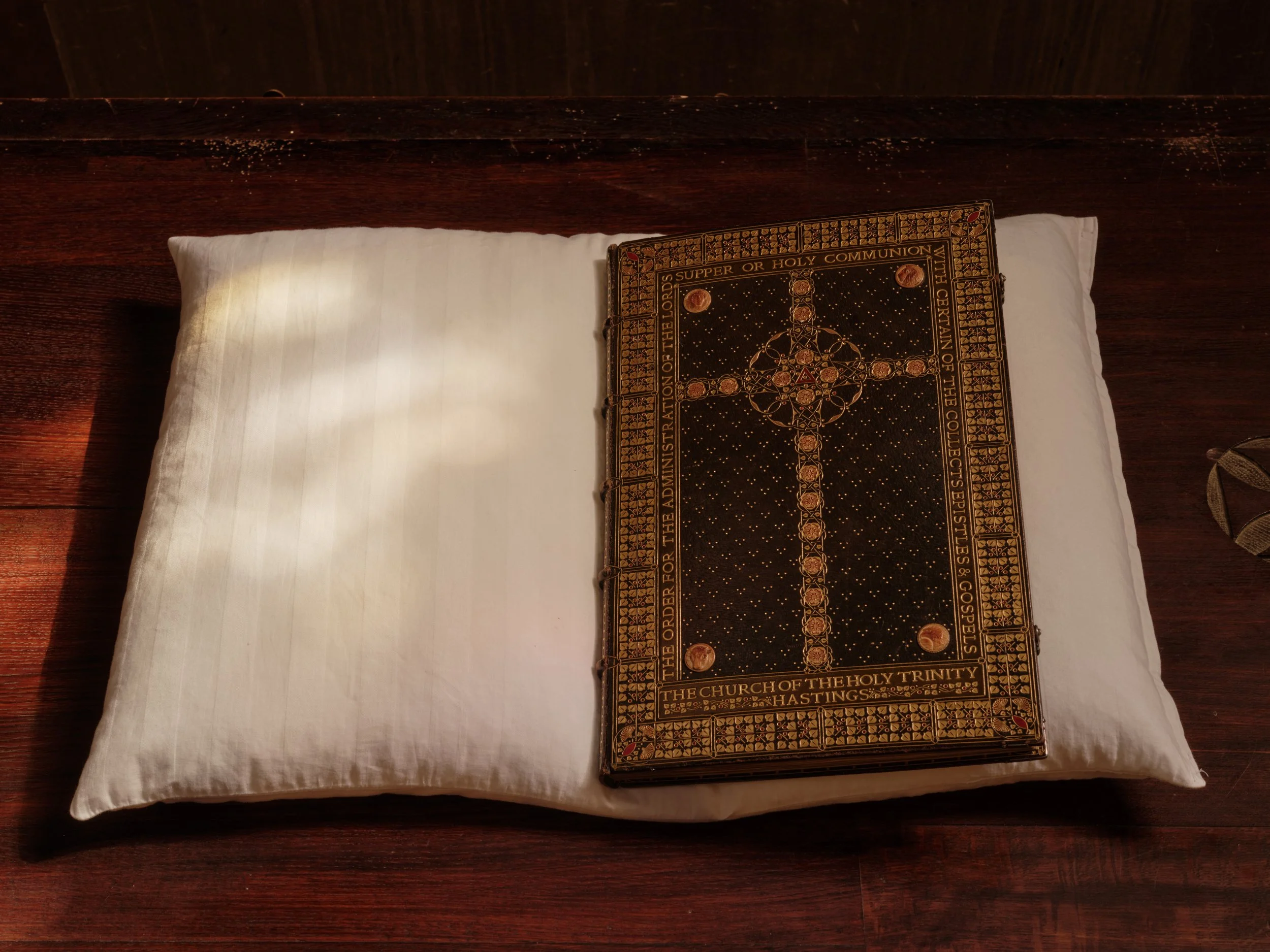
edward johnston missal in the collection of holy trinity hastings. PHotograph: felix spiller
The Missal, 160 handwritten pages of vellum, many illuminated, was commissioned by a Hastings doctor (Dr Gabb) in memory of his wife. Created in 1902, right at the start of his career, the Missal is Edward Johnston’s largest, and arguably greatest, work. On his death in 1944, his friend and mentor, Sir Sydney Cockerell, gathered together anything and everything from Johnston’s study. It is those papers that today are held by the Crafts Study Centre at the University for the Creative Arts. With considerable excitement and anticipation, in the spring of 2024 I sat in the Crafts Study Centre with those papers.
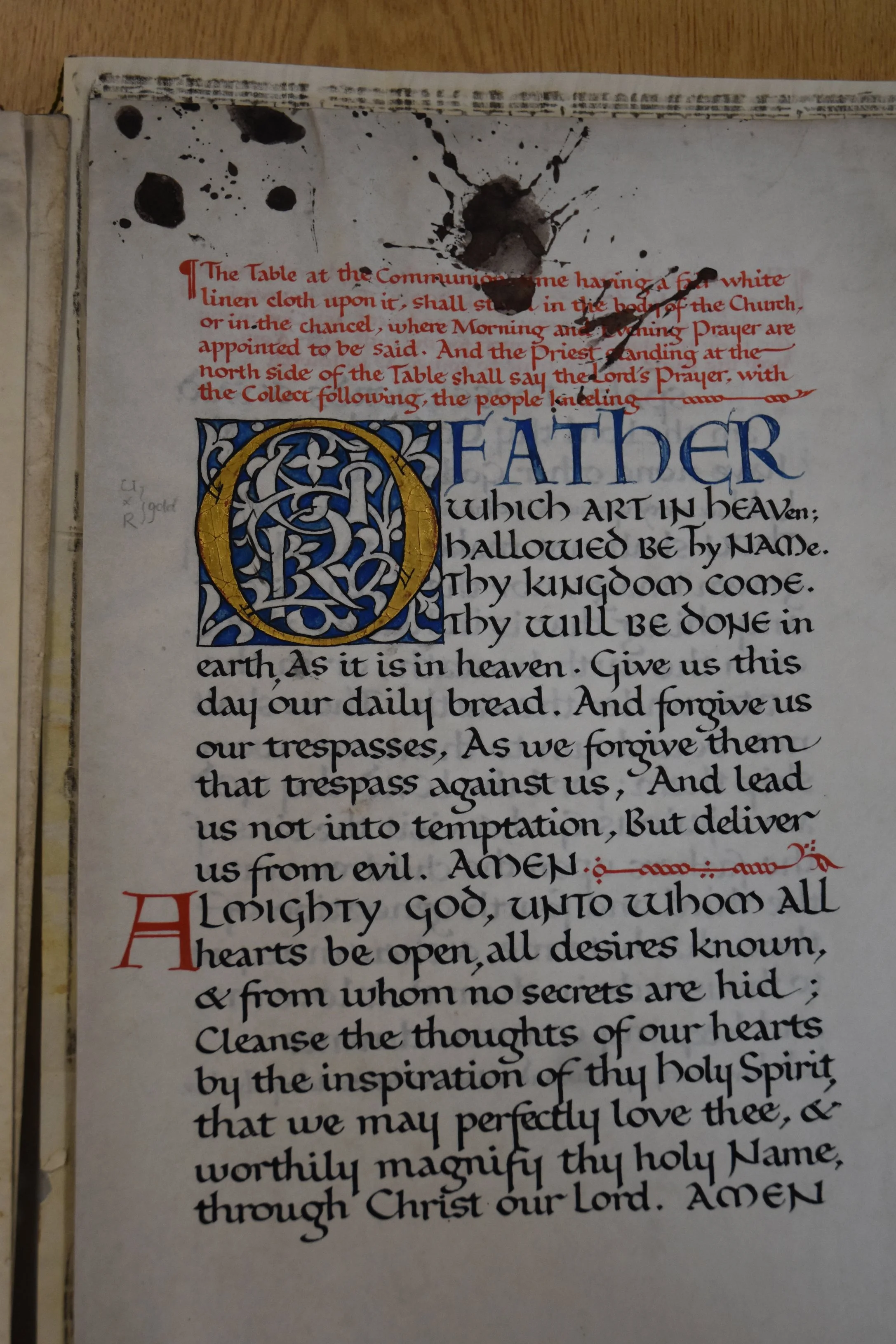
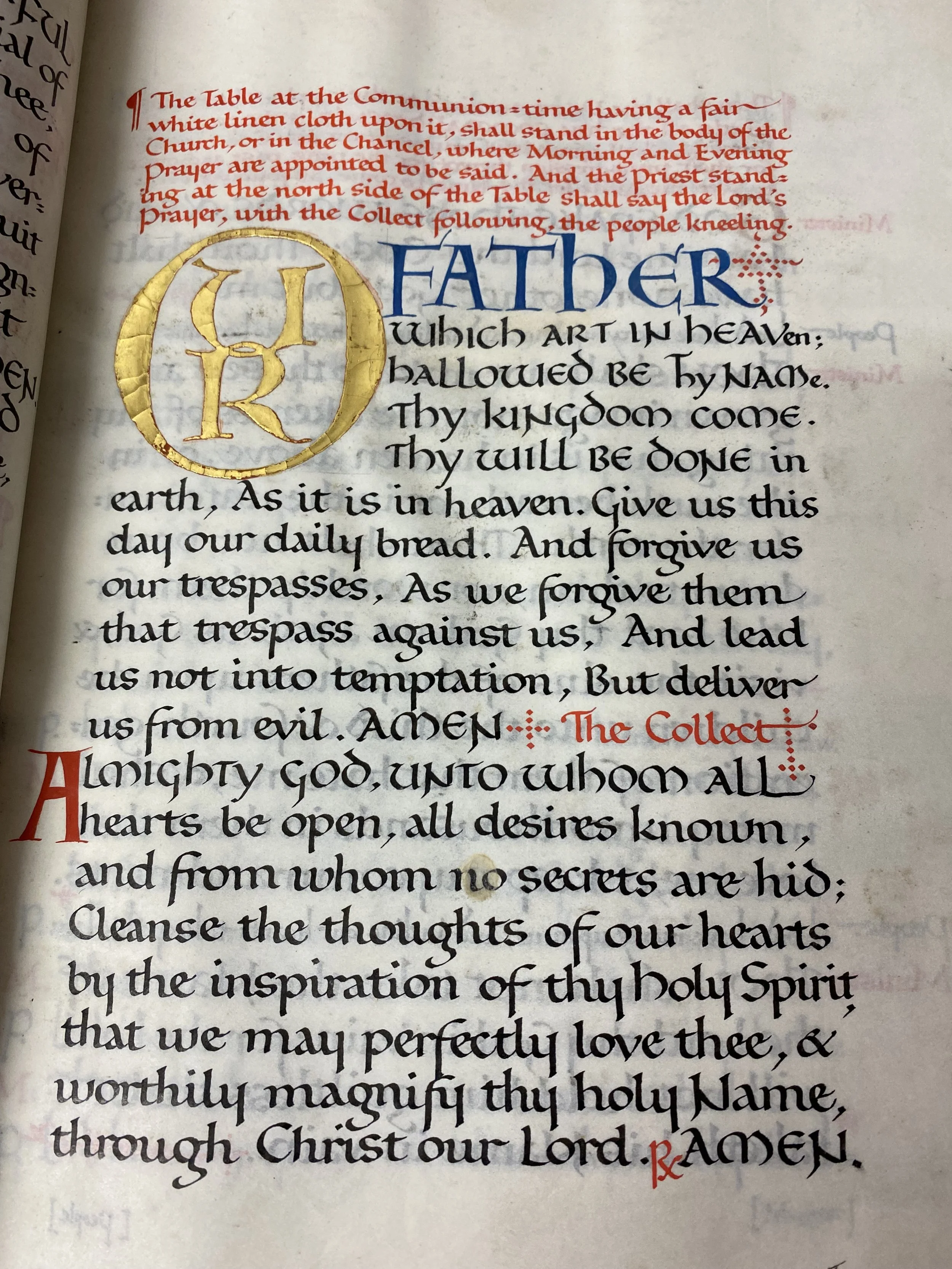
ABOVE: Edward Johnston Missal in the collection of holy trinity hastings (Photograph: Graham seaton). LEFT: The same (spoilt) page in the CRafts Study Centre edward johnston archive
I am no historian and had seldom held or examined original source material. I was not sure what to expect. What I found was breathtaking. There were entire draft pages of the Missal showing how Johnston worked at the layout and decorations. There were spoilt pages where the ink had been spilt – Johnston had a cat!
And then there were letters. Letters from Dr Gabb commissioning the work – “I hope that you quite understand that I give you a perfect free hand to make the very finest book that is within your powers … spare neither time, nor skill nor coin”. And a draft letter in Johnston’s own hand addressed to the vicar explaining and justifying the works – “It has taken about 5 month’s work, and for a Book made to last so long, one or two years could well have been spent in the making. The XX century however scarcely permits for patient work.”
I arrived at the Crafts Study Centre having seen a single work by Johnston and uncovered a little background. I left with a much deeper understanding of the treasure we hold. My visit enabled me to build a narrative around the Missal, a narrative that formed the centre pillar of a heritage pitch by HTH to the National Lottery Heritage Fund.
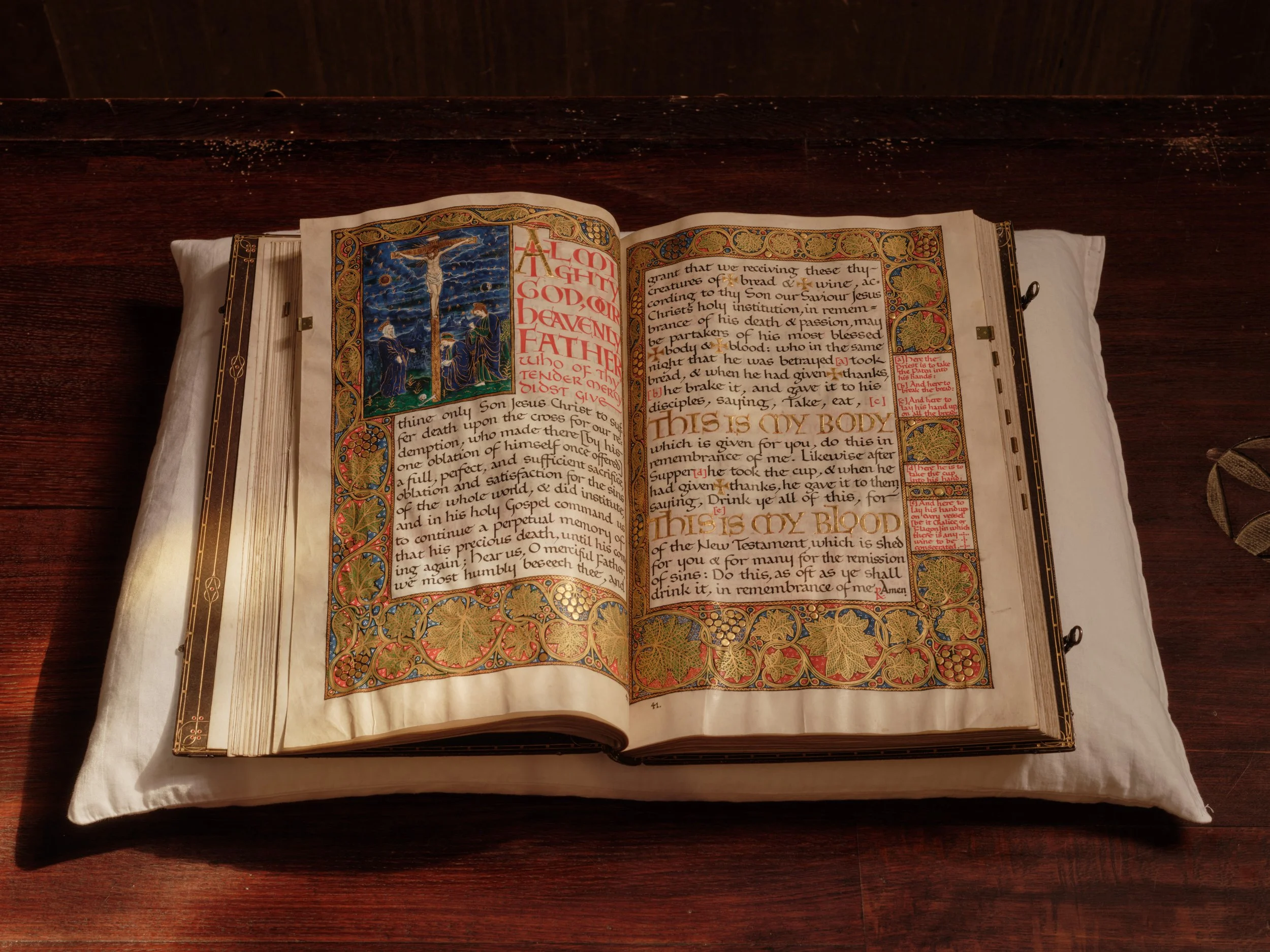
Edward Johnston Missal in the collection of holy trinity hastings. PHotograph: felix spiller
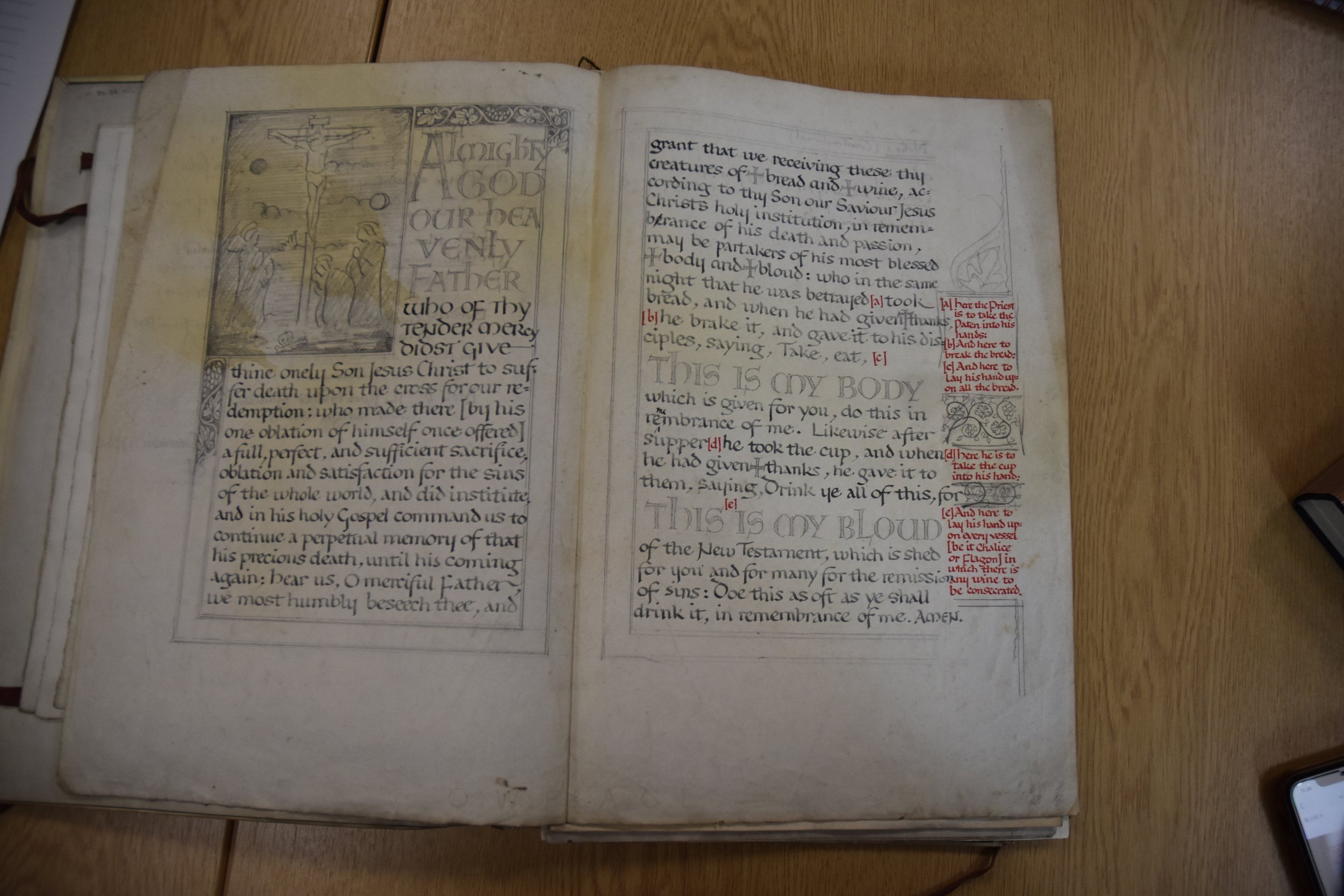
draft page in the CRafts Study Centre edward johnston archive
HTH is a large Grade 2* Gothic Revival Church. While it has a lively and growing congregation (don’t believe all you hear about the demise of the Church of England) the building is on the At Risk register. Our Heritage Fund bid aimed to rescue the building, and the treasures it contains, and to enable more community engagement. In September 2025 we were told that our bid was successful.
The project is large, costing over £5m, and will be onsite for around 18 months but at the end of it the Missal will no longer lie hidden in a safe but on displayed in the newly restored church for which it was created and its story, mostly gleaned from the boxes of papers held by the Crafts Study Centre, will be told.
Graham Seaton is a Chartered Surveyor who worked for retail and leisure operators. On retiring he moved to Hastings and took up an interest in local history. When the church he attended launched a National Lottery bid, he was asked to join the steering group as their “historian”, although he prefers the title “heritage lead”.
For more information on Edward Johnston at the Crafts Study Centre click here.